

The Catalyst
Issue #4
Originally Distributed January 27, 2026
Dear Changemakers,
Let’s name what many of us are feeling but rarely say out loud:
This is not business as usual.
The world feels heavier because it is. It is more polarized and more fragile than any of us are comfortable with.
Institutions are straining, trust is thin, people are tired…exhausted even.
In moments like this, the temptation is to shrink, to wait, or to focus only on what’s immediately in front of us.
But history tells a different story.
Big shifts don’t begin with sweeping declarations.
They begin when small groups of people decide not to turn away — and choose to act with courage, clarity, and care.
This issue of The Catalyst is an invitation to do exactly that.
Jess
Inside this issue:
Framework – Changemaking in Times of Uncertainty
Field Notes – What I’m seeing across leaders, teams, and systems right now
Spotlight – Angela, and the infrastructure that allows humans to lead well
Media Room – Two new podcast interviews and my 2026 Speaking & Facilitation to move you from insight to action.
Action Prompt – A critical question for your 2026 strategy
Breakthroughs for You – Accessible thought partnership for strategic action
Closing Reflection – Taking the Sign Down
Framework of the Month
Health as Necessary Infrastructure
When the world feels unstable, clarity doesn’t come from waiting for certainty; it comes from choosing responsibility.
Change is not something we do after conflict, uncertainty, or disruption.
It’s something we do through it.
The most important reframing I can offer right now is this:
Your work is one of the places where change must happen.
Not in theory.
Not someday.
But through the decisions you’re making this quarter.
Whether you lead a business, a nonprofit, a classroom, a community initiative, or a public institution, your work is a lever.
The question is no longer if change is required.
The question is: How intentionally are you shaping it?
I’ve been using this simple framework with leaders, teams, and communities who are asking:
“What does meaningful action look like right now?”
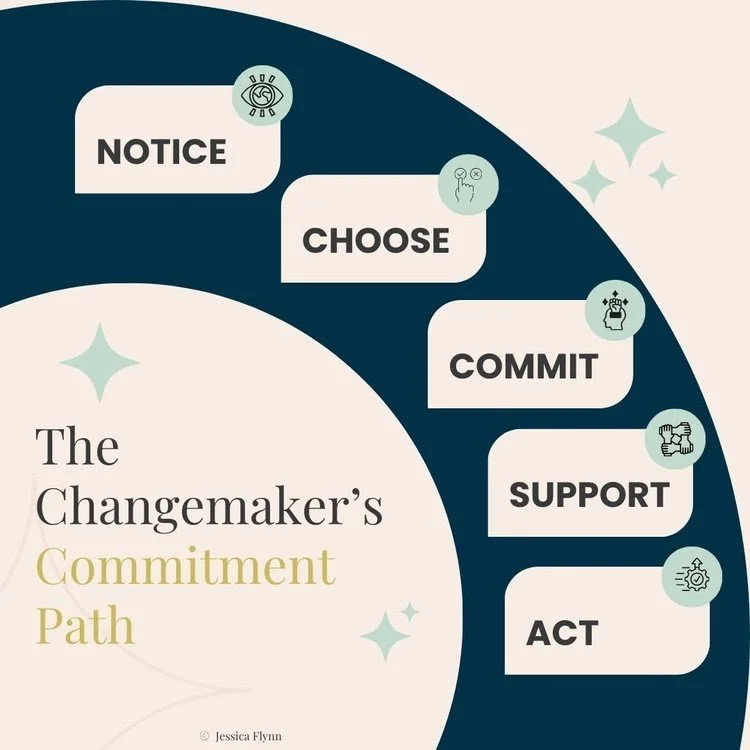
1. NOTICE: What is breaking or calling for attention?
Not abstractly. Not globally. In your sphere of influence. Ask:
Where are people struggling?
What tension, conflict, or unmet need keeps showing up?
What can no longer be ignored?
Changemaking always starts with honest noticing — not avoidance.
2. CHOOSE: What will I stand for through this moment?
This is where changemaking becomes a choice. Ask:
What values am I willing to act on, even when it’s uncomfortable?
What does “doing nothing” actually cost here?
If I fast-forward 5 years, what choice will I wish I had made?
Neutrality is still a decision. So is courage.
3. COMMIT: How will my work make good on this choice?
This is where strategy enters. Ask:
How does my work create real-world movement?
What decisions, resources, or priorities need to shift now?
Who needs to be involved for this to work?
Commitment turns belief into infrastructure.
4. SUPPORT: Who do I need beside me to sustain this?
No lasting change is solo work. Ask:
What kind of thinking, structure, or partnership do I need?
Where am I carrying too much alone?
Who helps me move from intention to action?
Support isn’t weakness — it’s how movements endure.
5. ACT: What is the next concrete step this quarter?
Not the whole plan. Just the next true step. Ask:
What decision can’t wait?
What conversation needs to happen?
What action would signal seriousness — to my team and my community?
History didn’t move because people felt ready. It moved because they acted anyway.
How to Use This Framework
Run it individually as part of your 2026 planning
Use it with your leadership team or board
Bring it into a strategy session when things feel stuck or overwhelming
You don’t need perfect clarity to begin.
You need a commitment and a path to act on it.
Field Notes
What we’re working on (and what it’s shifting)
Across the last few months, these insights have emerged from real, ongoing conversations and projects.
I’ve been in the room with:
founders and executive teams refining 2026 strategy
educators and school leaders grappling with youth mental health and relevance
nonprofit and community leaders navigating funding pressure and rising need
public-sector partners balancing long-term systems change with immediate realities
Across sectors, regions, and roles, a few patterns are showing up consistently:
1. Leaders feel the weight — but don’t always feel resourced
Many are carrying responsibility for people, outcomes, and communities without enough strategic space to think clearly. The challenge isn’t commitment, but capacity.
2. Avoiding conflict is no longer an option
Turning away from hard conversations doesn’t preserve stability; it quietly erodes it. The leaders making progress are the ones willing to lean in — naming tensions, making values-based decisions, and staying present through discomfort.
3. There is a real appetite for bold, human-centred action
Teams are done with platitudes. They want direction, coherence, and reassurance that their work actually matters in the bigger picture, especially now.
This is where changemaking becomes not just aspirational, but practical: when courage is paired with clarity, and values are translated into real decisions, real structures, and real action.
Speaking & Facilitation — 2026
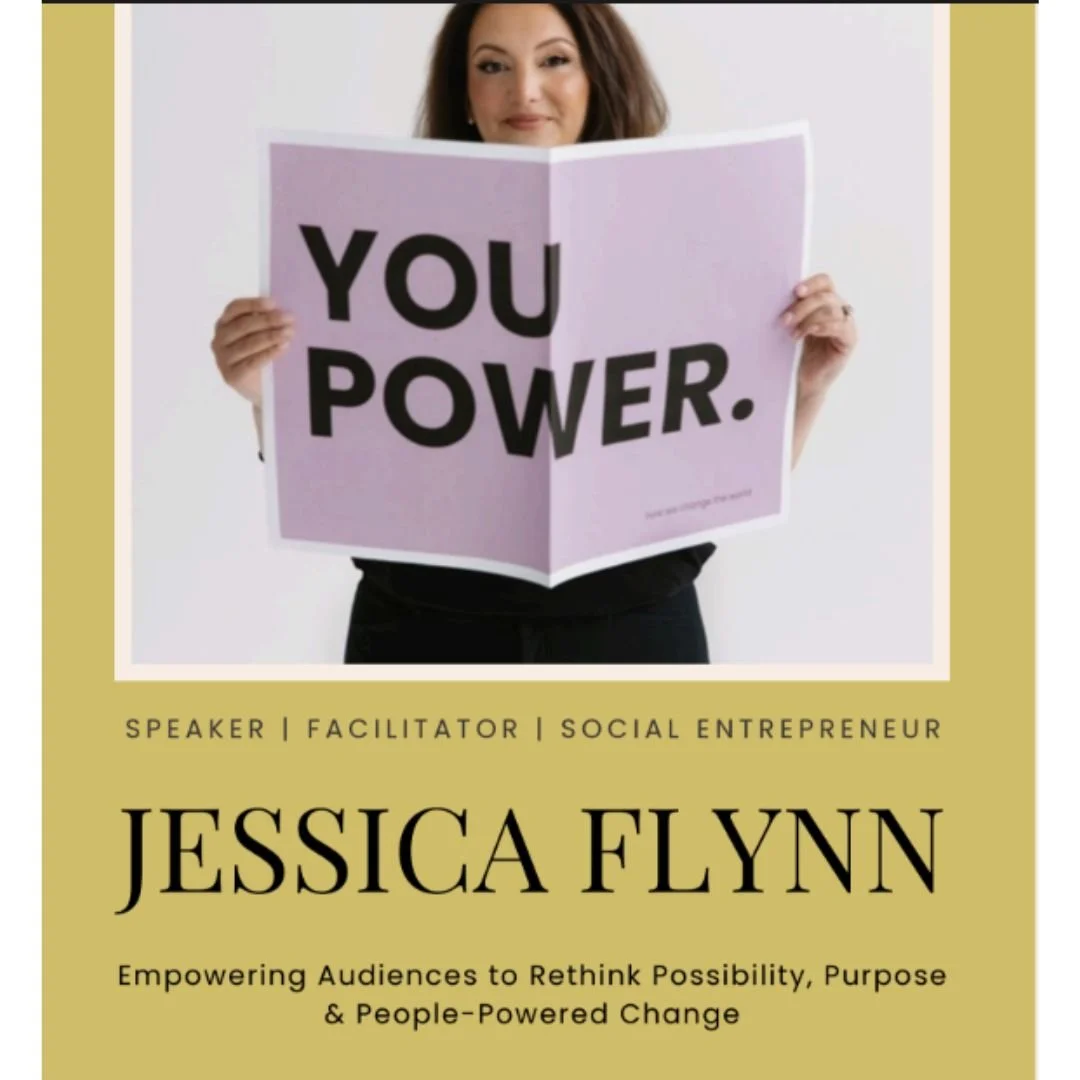
I’ve also recently updated my speaking page at thejessicaflynn.com, outlining 2026 topics and rates — from virtual workshops to full keynote addresses. If your organization, school, or community is looking for grounded, human-centred conversations that move people from insight to action, you’ll find the details there.
Take Action
Your Catalyst moves this month
This is not a “try one small thing if you have time” moment.
As you look at your plans for 2026, or even just the next 90 days, pause and ask yourself:
How will my work actively contribute to making things better?
For my team. For my community. For the people I serve.
Then choose one place to begin:
Name the tension you’ve been avoiding and bring it into the room.
Revisit your strategy through a human-centred lens: who does this actually serve, and how?
Commit publicly to a value you’re willing to act on — even when it’s uncomfortable.
Seek support where clarity or capacity is missing.
Change doesn’t require perfect plans.
It requires intentional action taken now, not later.
Strategic Partnership, Made Accessible
I’ve quietly restructured my consulting offers to create a streamlined point of entry for leaders and organizations who want to act now.
Why?
Because the moment is urgent and because my strategic support can broaden the impact of your important work, this shift was essential.
If you don’t have a clear strategic path for 2026 (or don’t have a strategic plan at all), it’s time to bring in a thought partner who can help you move from intention to action.
If I can be of service, through clear, strategic, action-oriented thought partnership, I’d be honoured.

Closing Message
Taking the Sign Down
Recently, Canadian Prime Minister Mark Carney reflected on a moment from history that feels uncomfortably relevant right now.
He referenced Václav Havel’s The Power of the Powerless and the story of a greengrocer who places a sign in his window every day. Not because he believes in it, but because it’s easier. Safer. A way to avoid trouble and go along to get along.
Havel’s insight was simple and unsettling: systems don’t sustain themselves on force alone; they persist because ordinary people participate in rituals they privately know to be false.
And the moment one person stops performing (when the greengrocer takes the sign down) the illusion begins to crack.
Moments like this in history don’t ask us to retreat or wait for certainty.
They ask us to show up with courage, clarity, and care for one another.
Big shifts don’t start with institutions.
They start when groups of people decide to stand for something and support each other in doing so.
YOUR work is one of those places.
The choices you make this quarter matter.
And the way you lead, especially now, leaves a mark.
If you’re looking at the road ahead and thinking, “I want to do more, but I’m not sure how to translate that into action,” consider this your signal.
I’ve intentionally restructured my consulting so that strategic, action-oriented thought partnership is more accessible, because this is not a moment for quiet compliance or business as usual. It’s a moment for leaders who are willing to lean in.
If I can be of help in sharpening your strategy, navigating complexity, or helping you make good on the promises you’ve made to your people and your community, I’d be honoured.
Let’s take the sign down.
Let’s go boldly into the rest of this quarter and set ourselves and each other up for impact that leaves a legacy.
With you in the work,
Jessica
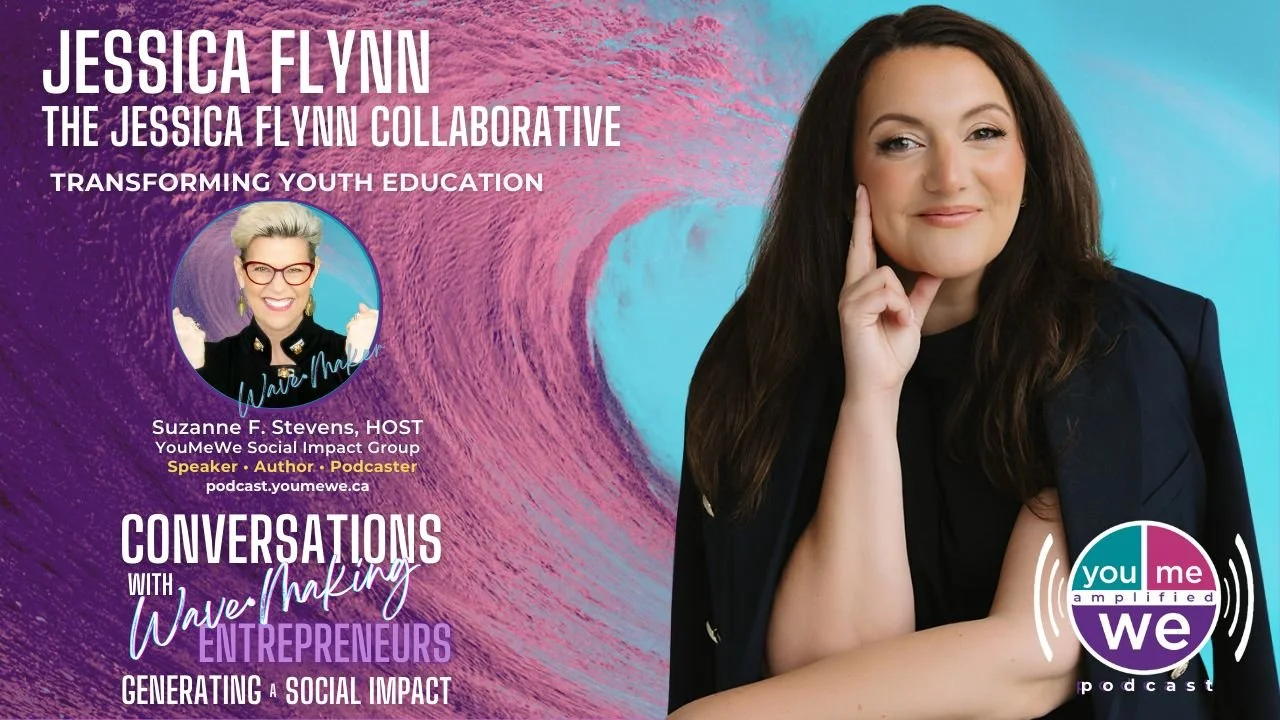
The Wavemaker’s Podcast — with Suzanne F. Stevens
Suzanne and I shared a powerful conversation about future-focused education models that empower students worldwide to recognize their value, build real-world skills, and step into leadership with confidence. We explored what it looks like to design systems that trust young people — and why that trust changes everything.
The Inul Chowdhury Show
This conversation cuts straight to the core of purpose and momentum. We talked about the idea that we are all one decision away from a more empowered life — and how identity, creativity, community, and resilience shape the paths we choose next. If you’re tired of recycled advice and ready for something real, this episode offers fuel for action. Listen here
Spotlight
Meet Angela Nyange: Why Support Is a Changemaking Strategy

Why Support Is a Changemaking Strategy
If this moment calls for courage, it also calls for support.
I want to spotlight Angela Nyange, founder of ANGEL Ops & Co., who joined my portfolio of social enterprises in July. Bringing Angela and her team into the work has made a tangible difference; not just in capacity, but in clarity, focus, and sustainability across everything I’m building.
Especially in complex times, no one leads well alone. Strategic, operational support is not a “nice to have.” It’s infrastructure.
When leaders are supported, they can:
Think more clearly
Act more decisively
Show up more humanly
If you’re feeling stretched thin, consider this a quiet reminder: seeking support isn’t stepping back — it’s stepping up.
Meet Angela
Founded by operations and project management expert Angela Nyange, ANGEL Ops & Co. is a full-service operations agency partnering with founders, leadership teams, and organizations across all industries.
Her team provides embedded support across:
Executive and administrative operations
Operations and project management
Marketing and digital infrastructure
Website and systems support
Podcast and email operations
Medical virtual assistance
And tailored operational services based on each organization’s needs
ANGEL Ops & Co. works alongside leaders building, scaling, or professionalizing their organizations who want a trusted partner to bring structure, clarity, and execution across the business.
If you’re looking for professional support to grow your impact and expand your capacity for changemaking, you can reach Angela directly at angelanyange254@gmail.com to explore fit.